
Neurocle Deep Learning Example Use Cases in Machine Vision
9 July 2026
Neurocle’s deep learning vision inspection technology is deployed across seven major industries to automate quality control, minimize human error, reduce overkill/underkill rates, and maintain high throughput.
- Semiconductor

Neurocle minimizes underkill (missing true defects) and overkill (false alarms) by catching micron-level anomalies that escape rule-based vision systems or manual inspection.
- Wafer Manufacturing: Early-stage detection of micron-scale defects on ceramic component surfaces (dark/white spots) and measuring wafer edge lengths to prevent defect propagation downstream.
- Patterning: Inspection of micro-pattern defects generated during photolithography and scanning wafer surfaces to make pass/fail judgments.
- Packaging: Using high-resolution imaging to verify micro-scale features at the chip level, including chip pattern defect classification, solder bump inspection on automated optical inspection (AOI) equipment, and between-chip scribe line inspection on automated visual inspection (AVI) units.
- Electric Vehicle (EV) Battery

Neurocle adapts to diverse battery formats—including prismatic, cylindrical, and pouch cells—covering both superficial cosmetic defects and internal, non-destructive evaluations.
- Cylindrical Cells: High-speed inspection of internal foreign materials, can exterior condition, electrode alignment, and cell interrupt device (CID) integrity.
- Pouch Cells: Real-time electrode height difference tracking, lead tab material surface checking, and lead tab welding inspection using synthetic defect generation. Internal contamination is verified non-destructively through X-ray and CT image deep learning models.
- Prismatic Cells: Precise validation of complex, irregular patterns on critical components like the vent weld area to reduce safety risks and maintain structural yield.
- Automotive Manufacturing
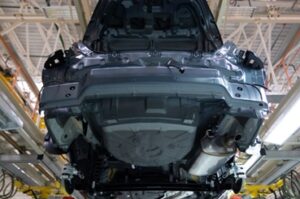
Designed to maintain consistent quality benchmarks despite rapid changes in vehicle models, customized parts, and unstable environment lighting.
- Press & Body: Real-time tracking of early surface cracks, wrinkles, or styling deformations in sheet panels. It also evaluates body-sealant application uniformity and checks structural welding beads.
- Painting: Precision screening for tiny pinholes, dust, foreign particles, scratches, and paint blister defects to avoid costly cosmetic reworks.
- Trim, Assembly & Components: Automated validation of interior/exterior component fastening (e.g., verifying bolt placement in the bonnet and vehicle floor). Specialized models process high-resolution X-ray imagery to detect irregular tire defects, inspect cylinder head cross-section holes, and evaluate car seat frames.
- Metal & Steel Processing
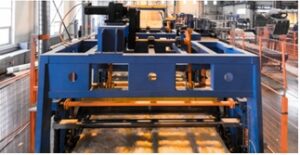
Maintains highly robust inspection models capable of operating flawlessly in aggressive industrial environments characterized by high heat, scale, severe glare, and volatile lighting.
- Rolling Mills: Tracking steel slab outlines and assessing rolled steel sheet thickness in real-time within high-temperature, high-humidity environments.
- Plating & Coating: Continuous roll-to-roll scanning on color-coated steel sheets to catch scratches or dents and classify subtle variations in surface texture.
- Cutting & Welding: Transitioning manual checks to automated AI evaluations for pipe welding seams and integrating Optical Character Recognition (OCR) to track raw markings on excavator steel sheets for routing.
- Food & Beverage (F&B)

Delivers real-time analysis on high-speed production lines where hygiene compliance, rapid throughput, and visual consistency are paramount.
- Raw Ingredients: Automatically grading agricultural items (e.g., evaluating internal voids in red ginseng via X-ray), measuring fat-to-lean mass distribution ratios in meat, and detecting surface contamination on eggs.
- Processed Items: High-speed dimensional tracking to check bread shape retention and classify structural defects in products like ramen noodle blocks or frozen dumplings prior to bagging.
- Packaging & Logistics: Inspecting film sealing channels on outer packaging, conducting OCR verification on printed expiration dates (e.g., on tofu containers), checking glass bottle opening integrity, and managing label application alignment.
- Pharmaceutical & Biotechnology
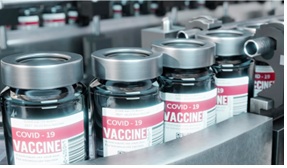
Applies standardized, micro-scale inspection protocols across delicate biological matrices and strict packaging environments.
- Biological Detection: Automating the morphology-based interpretation of large-scale pathology slides (detecting tumors, mitotic cells, or lesions) and classifying active microorganisms in industrial wastewater treatment.
- Exterior & Injectable Defect Inspection: Real-time scanning for fine fractures, ampoule/vial internal particulate sediment, powder injection black spots, and leakage or sealing failures.
- Formulation Quality: Verifying product dimensions, tablet coating uniformity, and thickness consistency across mass-produced medicines like Orodispersible Films (ODF).
- Medical Devices

Provides highly reliable quality control across tight manufacturing tolerances for high-risk clinical supplies.
- Catheters & Tubing: Detecting structural deformation, micro-perforations from mechanical drilling, and internal tube debris during continuous high-speed extrusion.
- Diagnostic & IVD Kits: Catching missing components or printing omissions in kit assemblies, alongside micro-level inspections for uneven carbon-electrode solution applications on blood glucose test strips.
- Disposable Medical Supplies: Continuous verification of liquid container metrics, including bubble detection inside eye drop bottles, blood bag seam quality, and clean alignment of vial graduation markings.
Core Enabling Technologies Supporting These Use Cases
Neurocle’s underlying software ecosystem utilizes four critical components to make these on-site use cases possible without requiring an in-house team of deep learning experts:
- Auto Deep Learning Algorithm (Neuro-T): A no-code, GUI-based software that automatically optimizes model architecture and hyper-parameters, achieving up to 99.9% inspection accuracy.
- Generative AI (GANs): Addresses the problem of rare defect data by synthetically generating highly realistic defect images to jumpstart model training.
- MLOps (Neuro-T Engine): Streamlines hands-off retraining pipelines directly on the factory floor, allowing a single specialist to manage systems that previously required an entire technical team.
- Edge AI Deployment (Neuro-R): A lightweight runtime library that implements multi-model inference pipelines down to 1.2 ms on edge computers, embedded processors, and industrial PCs.
Online Solutions (Imaging) Pvt Ltd., Chennai India distributes Neurocle products in India and can help customers build vision systems with our 3-decade experience in configuring Vision Systems as we also deal with other hardware brands like Teledyne, Navitar, CCS to provide a complete vision system with Deep learning. We can be contacted at [email protected], [email protected] and [email protected]
Use cases are provided here as a summary taken from Neurocle web site and summarized using AI tools as assistants
Recent Posts

Get the latest updates from ONLSOL directly in your inbox
We'll be glad to help you! Please contact our Sales Team for more information.
Would you like to learn more about Product Details?
Chat with Sales TeamWe'll be glad to help you! Please contact our Sales Team for more information.

Have an Imaging Challenge?
Tell us what you need to see, measure, identify, inspect or analyse.
Let's engineer the imaging approach.